
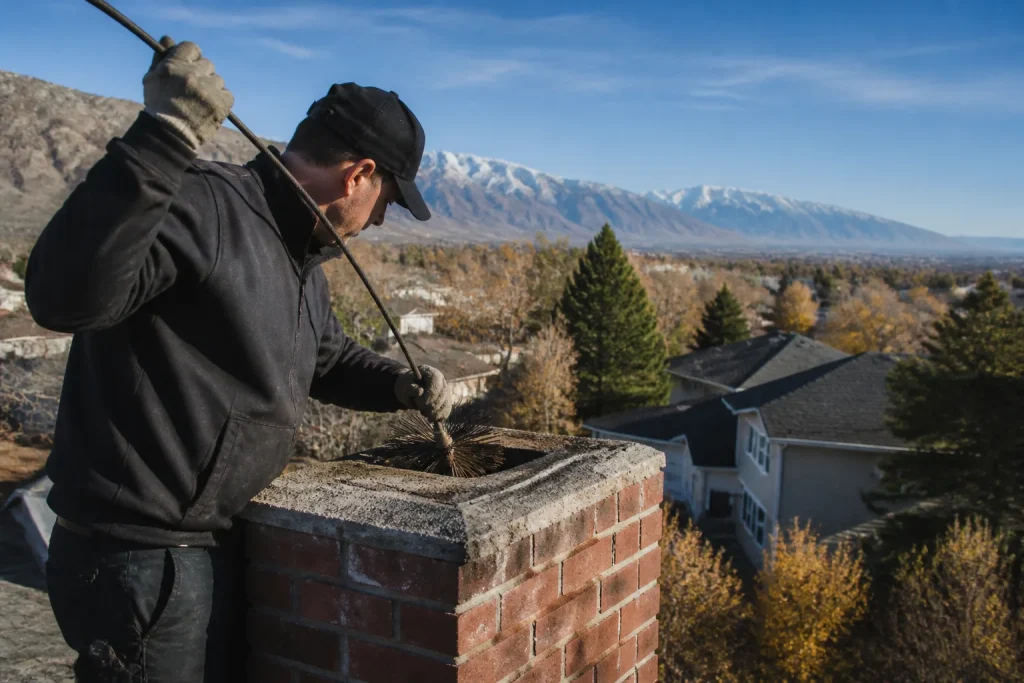
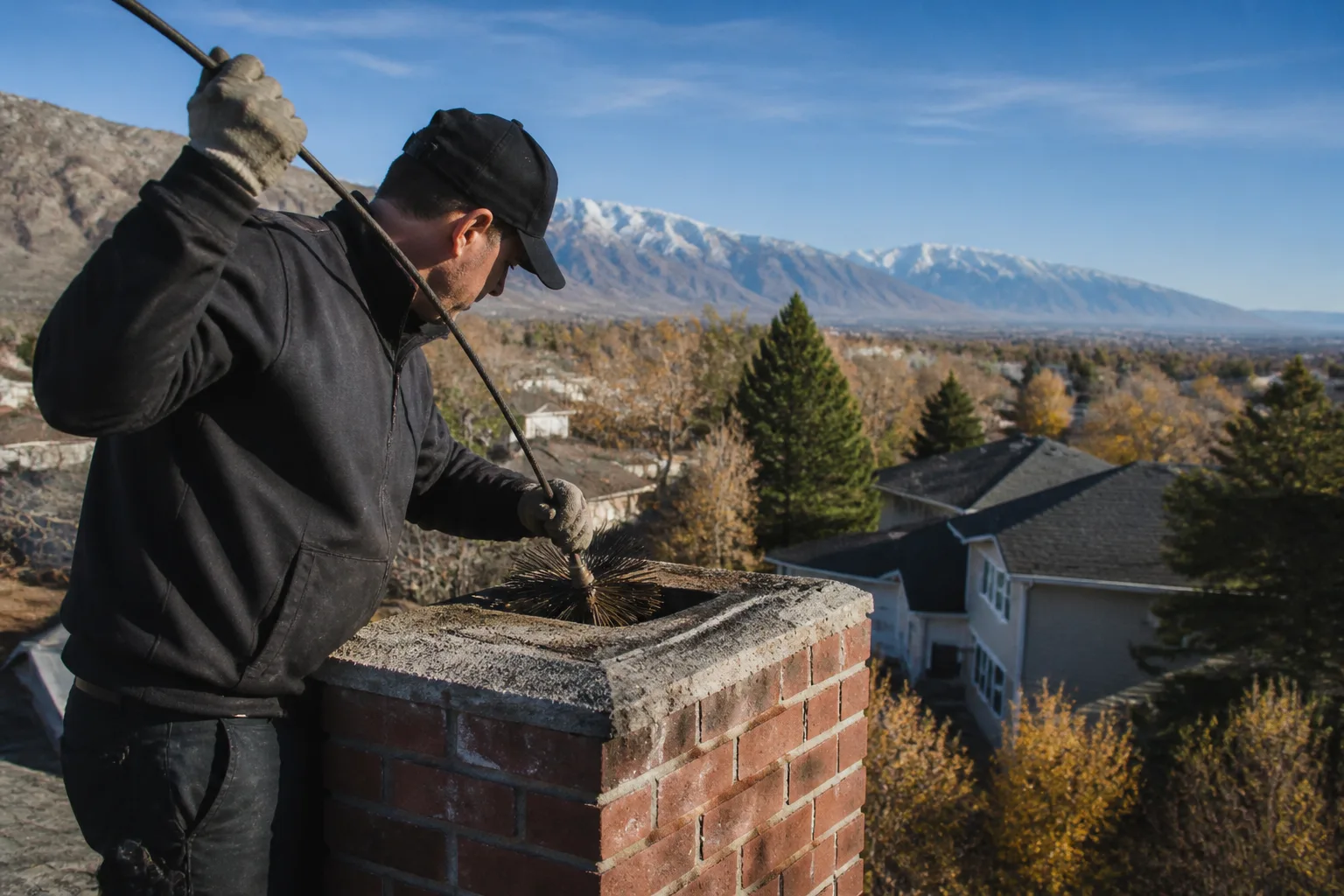
Top Signs You Need Chimney Cleaning Service – Don’t Ignore These
Most homeowners wait for a chimney problem to announce itself. It rarely does. The signs that matter are quiet: a smell that shows up in the wrong season, a stain you keep meaning to look at, smoke that curls back into the room instead of up the flue. This post maps each warning sign to the actual problem inside the chimney, so you know whether it’s a cleaning job or something that needs attention before you light another fire. If you’d rather skip the detective work, call (833) 482-6554.
What are the first signs a chimney in Bountiful needs cleaning?
The first reliable signs are a strong smoky or campfire smell when no fire is burning, dark residue around the damper or firebox, smoke spilling into the room instead of rising, and a visible buildup of soot or creosote on the flue walls. Each one points to something specific, and the fix depends on which one you’re seeing.
Here’s why the season matters in northern Utah. Our heating seasons run long, and a Bountiful fireplace often sees steady use from early fall into spring. That means creosote accumulates faster here than in milder climates, and warning signs show up earlier in the year, sometimes by mid-season rather than at the end of it. A chimney that would be fine for another winter in a warmer place may already be asking for attention in Bountiful.
What separates a routine sweep from a stop-everything moment is simple. Signs of buildup and odor mean schedule a cleaning. Signs of blockage, backdraft, or structural water damage mean don’t burn until someone inspects it. We inspect first and recommend second, so you’re not guessing which category you’re in.
Key Takeaways:
- A smoky smell in summer usually means creosote and moisture, not a phantom fire.
- Smoke rolling back into the room points to a draft obstruction or blockage.
- Black, glossy residue around the damper signals advanced creosote stages.
- White staining on the exterior usually means water is getting in.
Why does my chimney smell like a campfire in July?
A campfire smell in summer is caused by creosote in the flue absorbing moisture from humid air, then releasing that volatile odor back into the house when pressure shifts. No fire has been lit in months, so people dismiss it. It’s actually a specific signal about two things at once: how much creosote has built up, and how much moisture the chimney is holding.
Here’s the mechanism. Creosote forms in layers, and each stage behaves differently. Early-stage creosote is flaky and relatively easy to remove. As it matures into a glazed, tarry form, it holds moisture better and releases that smell more persistently. When the flue is damp and the outside air turns warm and sticky, the odor drifts down into living space. A house in Bountiful that sat closed up through a hot stretch will often smell strongest right when the weather turns.
The moisture piece is worth understanding. A chimney cap and a sound crown keep rain and snowmelt out of the flue. When either is damaged, water gets in, the creosote stays wet, and the smell gets worse. That’s why we treat cap and crown work as part of chimney health, not an upsell. If you see the July smell, a sweep plus a look at the cap tells you which problem you actually have.
What does smoke coming back into the room mean?
Smoke spilling back into the room means the flue isn’t pulling air the way it should. The usual culprits are a partial blockage, a damper that isn’t opening fully, negative pressure in the house, or a flue that’s too cold to establish draft. Of all the warning signs, this is the one that most often means stop and inspect before the next fire.
Blockages are the first thing we check. Nests, debris, and animal intrusion top the list. Utah wildlife is a real factor here: chimney swifts and starlings love an open flue, and raccoons are known to take up residence in uncapped chimneys around Bountiful. A nest or a collapsed pile of debris narrows the flue and forces smoke back where it came from.
If the flue is clear, we look at draft. A cold flue doesn’t pull well until it warms, and a house that’s tightly sealed can actually starve a fire of the air it needs to draft properly. Sometimes the answer is as simple as a cap screen that’s clogged with soot, and sometimes it’s a damaged flue that needs chimney repair. Our technicians have up to 15 years of experience reading these signals, and it rarely takes long to sort a backdraft into a clear cause.
What does black residue around the damper tell you?
Black, glossy residue around the damper usually means you’re looking at Stage 2 creosote or beyond. Stage 1 is flaky and light. Stage 2 is harder, crusty, and more stubborn. Stage 3 is glazed and tar-like, and it’s the stage that matters most for fire safety. Any of these on the damper or firebox floor is a cleaning signal, and the darker and glassier it looks, the more reason to schedule a sweep.
Creosote buildup is the main reason chimney fires happen. We’re not in the business of scare tactics, but that’s a real and well-understood risk, and it’s why buildup deserves attention rather than a shrug. The good news is that most creosote problems are a cleaning job, not a rebuild. When heavy glazed buildup has also damaged the flue surface, resurfacing can sometimes save the liner. That’s where HeatShield comes in. It’s the leading ceramic flue resurfacing system, and it can extend the life of a chimney without a full liner replacement, which keeps a repair cost-conscious where replacement isn’t actually necessary.
What does white staining on the outside of my chimney mean?
White, chalky staining on the exterior of a chimney is usually efflorescence, a sign that moisture is moving through the masonry and evaporating on the surface. It means water is getting into the chimney, not that the brick is dirty. This is the symptom most often mistaken for cosmetic wear, and it’s one worth taking seriously.
The two most common entry points are a failing crown and a missing or damaged cap. Water that reaches the flue can rust a liner, break down mortar, and freeze and thaw through Bountiful winters, which speeds up damage each season. A damaged crown cracks and lets water pool and seep downward; a cap without a proper screen lets rain and wildlife straight in.
What we look for with efflorescence:
- Whether the staining is on the crown, the stack, or the full face of the chimney.
- Whether the crown has visible cracks or gaps at the flue edge.
- Whether the cap is intact and screened.
- Whether the flashing where the chimney meets the roof is sealed.
Cap and crown work is preventive, and it’s the kind of repair that keeps a small leak from turning into a large one.
Which signs mean “clean soon” and which mean “stop using the fireplace”?
Signs of buildup, mild odor, and light soot mean schedule a sweep. Signs of blockage, backdraft, heavy glazed creosote, or water damage mean stop using the fireplace until it’s inspected. Getting this distinction right is the difference between a routine cleaning and an avoidable problem.
Clean soon:
- Light soot and flaky creosote on the firebox walls.
- Occasional smoky smell when the chimney is damp.
- A chimney you haven’t had swept in more than a year.
Stop and inspect:
- Smoke rolling back into the room when you light a fire.
- A strong acrid or smoky smell with no fire burning.
- Visible glazed or tar-like creosote.
- White staining or water marks, which point to fireplace repair at the firebox and flue.
- Any animal activity or a sudden change in how the fireplace draws.
When to call a pro
A self-check tells you what to mention on the phone, not what to fix. Chimney flues, liners, and fireboxes are a genuinely risky area of the home, and a trained professional should handle the diagnostic and any repair work. When in doubt between the two columns above, the safe move is to stop burning and get it looked at. An inspection is available as its own service, so you get a straight condition report before committing to anything else. That’s the “inspect first, recommend second” approach we stand behind.
What’s a seasonal self-check before your first fire?
A seasonal self-check means a quick look at the visible parts of your chimney before you light the first fire of the fall. It doesn’t replace a sweep. It just tells you what to say when you call one. Do it from the ground and from inside the house.
- From outside, look at the cap. Is it intact, screened, and free of obvious damage? A missing cap is an open door for weather and wildlife.
- Check the crown for visible cracks. This is where a lot of Bountiful’s water intrusion starts.
- Look for white staining or water streaks on the masonry.
- From inside, open the damper and shine a light up the flue. If you can’t see daylight or the flue walls are covered in dark buildup, that’s a call.
- Check the firebox for glazed or tar-like residue and for cracks in the box itself.
For a deeper inspection, the experts will always be a trained technician. Our full-service chimney coverage means sweeping, inspection, repairs, and cap and crown work all under one roof, so the person who finds the problem isn’t handing you off to someone else. We also install and repair with professional-grade products from brands like Copperfield and DuraFlex, so the parts going into your chimney aren’t the big-box substitutes. One company, every chimney service, from Chimney Sweep Bountiful.
The Bottom Line
Most chimney problems start as small, specific signals: an out-of-season smell, a backdraft, dark residue on the damper, a white stain on the brick. Learning to read those signals tells you whether you need a cleaning or a closer look. And if you’ve recently bought a home in Bountiful or haven’t had the chimney serviced in more than a year, an inspection is the smart first step.
We answer 24/7. Fast dispatch from 7am to 7pm, Sunday through Friday, and closed Saturday. Call us at (833) 482-6554 and we’ll take a look, inspect first, and tell you plainly whether work can wait or needs attention now.
Frequently Asked Questions
A chimney should typically be swept once a year if it sees regular use, and the long heating seasons in northern Utah often justify it. If you notice any of the signs above before the year is up, don’t wait. Call (833) 482-6554 for an inspection-led assessment.
If the smell is strong and persistent, the safe answer is no, get it checked first. A summer or early-fall smell usually points to creosote and moisture, but it’s worth confirming before you burn. Call (833) 482-6554 to schedule an inspection.
White staining is usually a sign of water getting into the masonry, so it’s worth investigating rather than ignoring. The most common causes are a cracked crown or a damaged cap, both of which we handle. Call (833) 482-6554 for a free estimate.
Sometimes a repair is all you need. Where the flue surface is damaged but the liner is otherwise sound, resurfacing with HeatShield can restore it and extend the life of the chimney without a full replacement. We’ll tell you straight which applies. Call (833) 482-6554 to schedule.
Written by the team at Chimney Sweep Bountiful.
Need Chimney Cleaning Help?
Call Chimney Sweep Bountiful - the local pro we connect you with is licensed and insured, here with fast help in Bountiful.
(833) 482-6554